
USS Liberty incident -
A BBC Documentary
The USS Liberty incident was an attack on a United States Navy technical research ship, USS Liberty, by Israeli Air Force jet fighter aircraft and Israeli Navy motor torpedo boats on June 8 1967, during the Six-Day War.
The combined air and sea attack killed 34 crew members (naval officers, seamen, two marines, and one civilian), wounded 171 crew members, and severely damaged the ship. At the time, the ship was in international waters north of the Sinai Peninsula, about 25.5 nmi (29.3 mi; 47.2 km) northwest from the Egyptian city of Arish.

The documentary "USS Liberty incident" details the attack on the U.S. Navy spy ship USS Liberty by Israeli forces on June 8, 1967, during the Six-Day War (0:03). The attack resulted in 34 crew members killed and 171 wounded, and severe damage to the ship (21:15-21:18).
Key points from the video:
The Attack (0:11-1:00): Israel maintains the attack was a tragic mistake due to misidentification (1:23). However, survivors and some U.S. officials believe it was a deliberate act and a "cold-blooded murder" (1:07-1:20). There were multiple Israeli planes that identified the ship as American before the attack (17:44-18:02). The attack included both air and sea assaults, with a torpedo blowing a large hole in the ship (20:20-23:02).
The Ship's Purpose (0:36-0:41): The USS Liberty was an unarmed American spy ship equipped with sensitive electronic intelligence gathering equipment, designed to listen to communications and pass intelligence to the U.S. government (6:34-6:42).
The Aftermath and Cover-up Allegations (1:50-2:01): Many survivors claim a conspiracy and cover-up have concealed the truth for decades, citing the rigorous efforts to silence witnesses and control information (39:45-40:03). Despite immediate SOS messages, U.S. aircraft that were launched to assist were controversially recalled (26:00-28:26).
Political Implications (3:07-3:42): The incident occurred during a pivotal moment in U.S.-Israeli relations, marking a turning point where the security of Israel became a strategic objective for the U.S. The documentary suggests a potential connection to a secret joint U.S.-Israeli operation called "Cyanide," aimed at gathering intelligence against Egypt (45:51-50:05).
Unanswered Questions (4:05-4:09): Despite decades of campaigning by survivors for a full inquiry, the exact reasons behind the attack and the subsequent handling of the incident remain largely unexplained by official sources (57:44-57:50).
Why deny US planes?
The video indicates that Robert McNamara, the U.S. Secretary of Defense, ordered the recall of aircraft that were sent to assist the USS Liberty, and later refused permission to send conventionally armed rescue flights (26:00-26:02, 27:09-27:12).
Admiral Larry Guys, commander of Task Force 60, stated that he was told by Lyndon Johnson that he "didn't give a damn if the ship sunk," and would "not embarrass his allies" (28:21-28:26). This suggests a reason for recalling the planes was to avoid embarrassing Israel.
McNamara himself denies these claims in the video, stating, "I'm absolutely certain that's false. ... I know nothing about it" (28:38-28:57).
Why ignore USS Liberty evidence?
The video suggests that evidence related to the USS Liberty incident was ignored or manipulated during the naval inquiry for several reasons:
Suppression of Testimony: Crew members, such as one who testified for two and a half to three hours about the captain's condition, armor-piercing projectiles, and the machine-gunning of life rafts, later discovered that much of their testimony was never recorded (55:34-56:11).
Exclusion of Key Witnesses: The chief engineer, who took command of the ship after Captain McGonagal blacked out, was intentionally kept out of the inquiry's minutes, despite his attempts to provide his account (56:15-56:44).
Lack of Evidentiary Basis: Merlin Starring, later the Navy's top lawyer, reviewed the inquiry's report and stated he "could not find an evidentiary basis" for Admiral Kidd's conclusion that Israel had attacked in error. He had "considerable trouble" finding evidence in the record to support the findings and conclusions reached by the Court of Inquiry (56:47-57:35).
Political Motivation: The documentary implies that President Johnson and the White House wanted to avoid publicizing the incident to prevent harm to relations with Israel and with Jewish communities in the United States, leading to a "travesty" in how it was handled (1:03:04-1:03:14). It was perceived that "nobody in power wanted to let questions about the USS Liberty spoil relations with victorious Israel" (1:04:37-1:04:42).
How did Liberty survivors feel betrayed?
The USS Liberty survivors felt betrayed by their own government due to several actions and decisions, as highlighted in the video:
Lack of Support During Attack: Despite being under attack and sending SOS messages, American rescue planes that were launched were recalled, leaving the ship without immediate help (26:00-28:26, 38:48-38:50). Survivors questioned why the Sixth Fleet was absent during their time of need, asking, "Where the hell were you? Why didn't you come?" (38:48-38:50).
Cover-up and Silence Orders: Survivors were explicitly ordered not to talk about the attack to anyone, including family members, and faced threats of court-martial if they did (39:45-40:03, 1:01:41-1:01:43). This directive was seen as part of a larger cover-up (30:33-30:36, 1:04:05-1:04:07, 1:06:08-1:06:10).
Dispersal and Secretive Medal Awards: After returning home, the Navy scattered the crew members, ensuring no two were posted together (1:01:46-1:01:48). Medals, including the Purple Heart, were awarded secretively, with warnings not to tell anyone where they received them (1:01:50-1:02:07). Captain McGonagal's Medal of Honor was not presented by the President, deviating from normal protocol (1:02:27-1:02:46).
Manipulated Inquiry: The naval inquiry led by Admiral Kidd was perceived as biased, ignoring crucial evidence and making up its mind in advance (55:34-56:11). The fact that much of the testimony was not recorded and key witnesses were excluded contributed to the feeling that justice was denied (56:06-56:44).
Political Prioritization: The video suggests that President Johnson prioritized relations with Israel over fully acknowledging the attack's nature and supporting the crew, leading to a "travesty" in how the situation was handled (1:03:04-1:03:14, 1:04:37-1:04:42). The official citations for awards mentioned "unprovoked and unexpected armed attack" but never identified Israel as the perpetrator (1:03:45-1:03:56).
Unanswered Questions: After 35 years, survivors still felt they hadn't learned why the attack happened, leading to ongoing bitterness and a sense of unresolved injustice (4:05-4:09, 1:06:08-1:06:10, 1:07:25-1:07:30).
Why the nuclear strike order?
The video states that a nuclear strike order was given because the U.S. initially believed the USS Liberty had been attacked by Egypt, the presumed attacker (24:34-24:39, 25:35-25:48).
When the Liberty's SOS message was picked up, the American Sixth Fleet, approximately 500 miles away, ordered retaliation (24:04-24:12). This included readying nuclear-armed A4 bombers and launching their fighter escorts (24:15-24:31). The target was believed to be Cairo, Egypt (25:19-25:23).
However, the order for the nuclear strike was recalled by Defense Secretary Robert McNamara, who "absolutely certain" directed the aircraft to return, averting the strike (26:00-26:30, 26:41-26:46).
How did the Liberty's fate impact US foreign policy?
The video explains that the USS Liberty incident served as a turning point in the relationship between the United States and Israel (3:16-3:18).
Specifically:
Before the incident, the U.S. had avoided being a major arm supplier to Israel (3:21-3:24). However, after 1967, Israel's dominance in the Middle East grew "thanks to its alliance with the US" (3:09-3:13).
Paradoxically, the security of Israel became a strategic objective for the U.S., which it had not been previously (3:35-3:42).
The incident and its subsequent handling, including the alleged cover-up, meant that the U.S. had "finished our relations with the Arab world for a long time to come," with six Arab states breaking relations (52:30-52:37). 7).
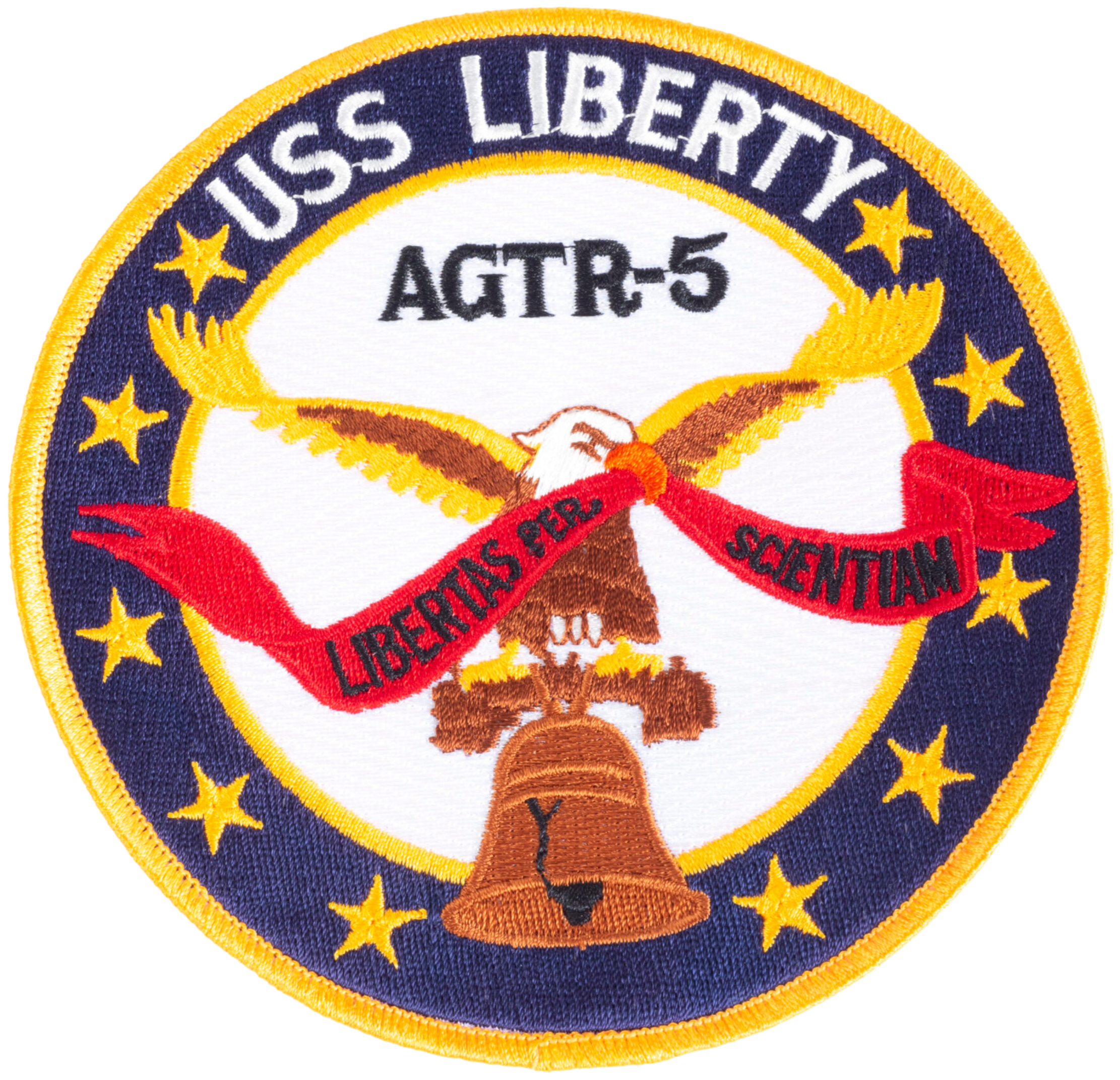
THE USS LIBERTY
June 8, 1967 — the day the USS Liberty was attacked. On that fateful day, the USS Liberty, an American naval intelligence ship, was mistakenly attacked during the Six-Day War in 1967.
Despite flying a U.S. flag and clearly identifying itself, the ship was targeted by Israeli fighter jets and torpedo boats. The assault lasted for several hours, causing severe damage, numerous casualties, and testing the crew’s resilience and courage in the face of unexpected betrayal.
The story of that day is one of survival, faith, and an unbreakable human spirit.
Make an
impact today
Support the USS Liberty Veterans Association by donating. You will then receive our quarterly newsletter, be included in all mailings, be invited to participate in all USS Liberty events, and more. The USS Liberty Veterans Association is a registered nonprofit organization dedicated to supporting and honoring the veterans who served aboard the USS Liberty